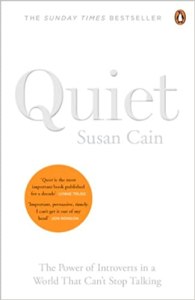
by Susan Cain
5*/10
Key Ideas:
Introversion is a preference for environments that are not overstimulating.
Set up your work, your hobbies, and your social life so that you spend as much time inside your sweet spot as possible.
Introverts are capable of acting like extroverts for the sake of work they consider important, people they love, or anything they value highly.
Other interesting notes:
1/3 to 1/2 of people are introverts. Introversion and extroversion exist on a spectrum.
Our workplaces and schools cater to those who prefer group projects and high levels of stimulation.
Introverts like people they meet in friendly contexts; extroverts prefer those they compete with.
Introverts think before they act, digest information thoroughly, stay on task longer, give up less easily, and work more accurately.
It’s only when you’re alone that you can engage in deliberate practice.
Venting doesn’t soothe anger; it fuels it. We’re best off when we don’t allow ourselves to go to our angry place.
After a day’s work an introvert may need to quietly recharge, while the extrovert may find the introvert’s withdrawal hurtful; conversely, the extrovert may want to jointly socialize with others, which the introvert may find exhausting.
First, mutually understand where the other party is coming from; second, balance their needs for socializing and for solitude in a practical compromise.
Thoughts on the book:
*In my opinion, could have been a blog post. For a lot of people, this book was the first time they felt understood, so I’d recommend it if you think it could be the case for you. Goes too far in the “introvert = good” direction.
Longer summary/notes: Sivers, wiki
If you like this, you’ll probably like: Introverts, INTJ, author’s TED talk, Deep work, books
 Leo :)