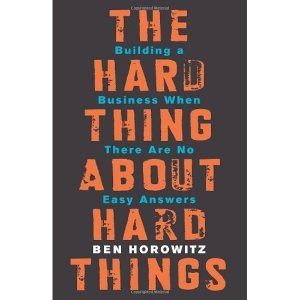
by Ben Horowitz
8*/10
Key Ideas:
Be transparent and honest. Without trust, communication breaks. Bad news travels fast.
Skills to run organization: knowing what to do, getting company do to what you know.
Avoid management debt by having good performance(/promotion) management and employee feedback processes.
Other interesting notes:
Good culture encourages employees to speak their mind. They are aware of the issues that kill companies way before the companies go under.
Take care of people, products and profits, in that order.
Training is mandatory and the highest leverage activity a manager can do.
Don’t manage strictly by numbers.
Most business relationships either become too tense to tolerate or not tense enough to be productive after a while.
To lay off employees the right way, be decisive and communicate clearly.
You need 2 types of friends: person who will be over the moon excited when good things happen, and those you can rely on when life is on the line and you have one call.
Celebrate wins. Don’t stop doing it when the company grows.
Avoid the Peter principle (everyone gets promoted to their level of incompetence).
Peacetime CEOs are focused on market consolidation and expansion. Wartime CEOs are needed to fend off existential threats.
Smart people can make bad employees. They should also work hard, be reliable, and be an excellent member of the team.
Thoughts on the book:
* 10/10 if you’re growing a startup or lead a big team.
If you like this, you’ll probably like: High output management, Rework, Zero to one, books
 Leo :)