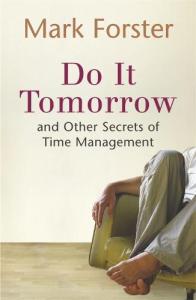
by Mark Foster
7/10
Key Ideas:
Closed to-do lists. New tasks never get added to “today’s to-do list”, unless you really can’t avoid it.
Define a vision of what you want to achieve, including what you are NOT going to do.
Work on one thing at a time and devote you full attention to the task at hand.
Other interesting notes:
99%+ of tasks don’t have to be done the day you get them.
Do one thing at a time. The old Zen saying applies: When you are chopping wood, chop wood. When you are carrying water, carry water.
Rather than just being “interested” in writing, you need a commitment of “writing an article each month for my newsletter”.
Checklists for regular tasks you do each day or week.
Current initiative – Special activity you work on FIRST before you work through your lists.
It is easier to get things done if you do a little bit frequently (usually daily) rather than attempting a large chunk of work infrequently.
Prioritisation by importance usually doesn’t work, as “Not important” tasks become “never be completed” tasks.
If you are overwhelmed, or you don’t finish your to-do 3 days in a row, find the cause and fix it:
You are not working efficiently. Solution: Work in closed lists and group similar work together.
You have too much to do. Solution: Cut back on your commitments.
You are not leaving enough time. Remember your future diary pages already have the commitments of daily living. Remedy: Don’t over commit your time and leave time for yourself.
Thoughts on the book:
Some good counter-intuitive time management ideas. The book does not provide an end-to-end productivity system, so don’t start with this one.
Longer summary/notes: Summary
If you like this, you’ll probably like: A simple productivity system, Zen to done, GTD, Eat that frog, 4 disciplines of execution, books
 Leo :)